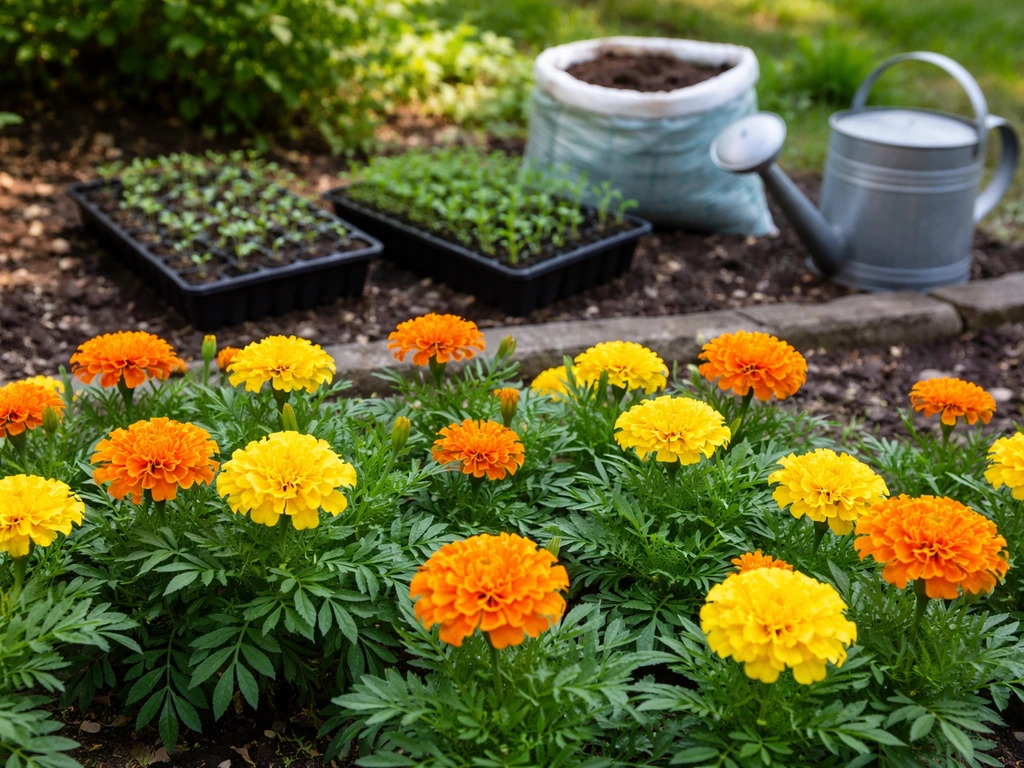
Growing marigolds is genuinely one of the easiest things you can do in a garden, but there are a few details that separate a scraggly, half-blooming plant from a full, vibrant one. This guide walks you through every path: starting from seed, planting a nursery transplant, and growing new plants from harvested flower heads. It also covers how to get bigger blooms, fix common problems, and know exactly what to do right now based on where we are in the season.
How to Grow a Marigold: Big Blooms Step by Step Guide
First: which marigold are you actually growing?
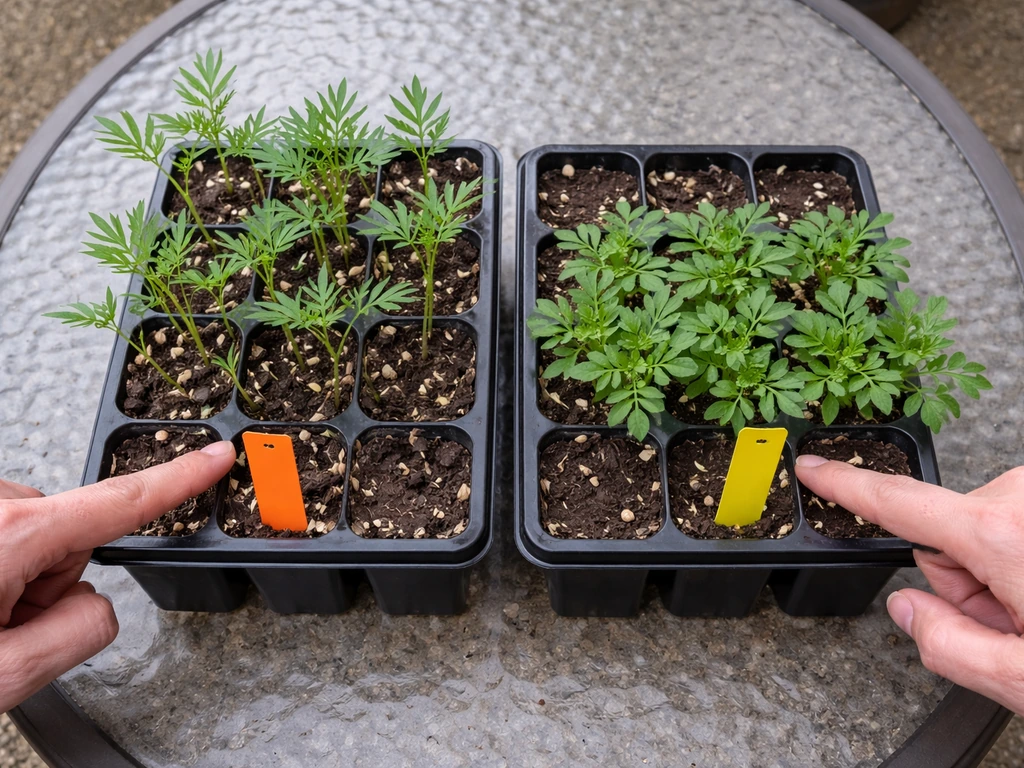
This matters more than it sounds. When most people search for how to grow a marigold, they mean one of the common garden marigolds: African marigolds (Tagetes erecta), French marigolds (Tagetes patula), or signet marigolds (Tagetes tenuifolia). These are the bright orange and yellow annuals you see at every nursery and garden center, and they are what this entire guide is built around.
Marsh marigold (Caltha palustris) is a completely different plant. It is a native wildflower that grows in consistently wet conditions, near streams, bogs, and bottomlands. It actually thrives in the kind of waterlogged, poorly drained soil that would kill a Tagetes marigold within days. If you are trying to grow marsh marigold for a rain garden or pond edge, the advice in this guide does not apply. For common garden marigolds, keep reading.
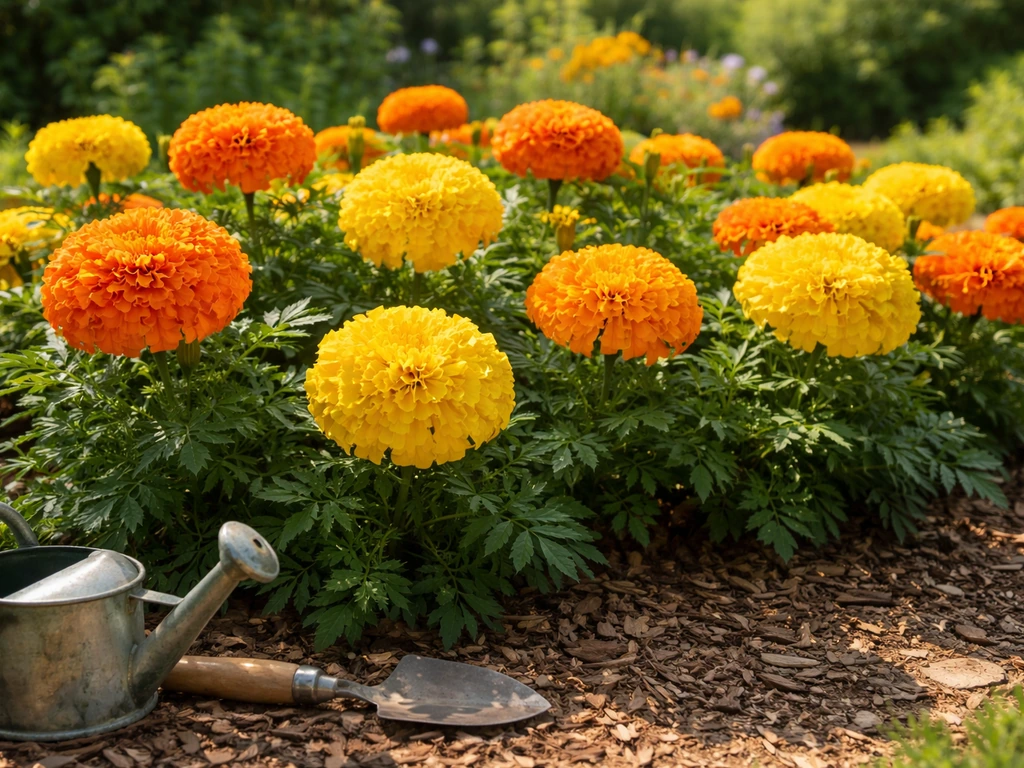
Within garden marigolds, the main choice comes down to size. African marigolds grow tall (up to 3 feet) with large, ball-shaped flowers that are ideal for cutting and dramatic garden displays. French marigolds stay compact (6 to 12 inches), branch more freely, and tend to rebloom without much fuss. Signet types are smaller still, with ferny foliage and dainty single flowers. If you want big blooms, go with African (Tagetes erecta) varieties like 'Crackerjack' or 'Inca'. If you want a long-season, low-maintenance edging plant, French marigolds are the better pick.
The best spot, soil, and light for marigolds
Marigolds want full sun, meaning at least 6 to 8 hours of direct sunlight per day. This is non-negotiable if you want real flowering performance. Plants grown in part shade will stretch toward the light, produce fewer blooms, and become leggy. Pick the sunniest spot in your yard or on your patio.
Soil should be well-drained and sit in the pH range of 6 to 7. Marigolds are actually pretty tolerant of average or even poor soil, but they will not tolerate soggy roots. If you’re trying to keep the soil consistently moist, like in a water-focused setup, focus on drainage so you don’t end up with soggy roots. If your soil is heavy clay, work in compost or coarse sand before planting to open it up and improve drainage. If you are growing in containers, any good quality potting mix will do the job. Avoid overly rich, highly fertilized soil, which tends to push leafy growth at the expense of flowers.
Starting marigolds from seed
Growing from seed is the most rewarding and most economical way to get marigolds, and it is easier than most beginners expect. The key is getting your timing right.
Timing your sow
Start marigold seeds indoors 6 to 8 weeks before your last expected frost date. Since today is March 24, 2026, if your last frost falls somewhere in late April or May (which covers most of the US Midwest, Northeast, and upper South), you are right in the window to start seeds now or within the next few weeks. If your last frost is in mid-April, you should be starting seeds this week. For detailed guidance on exactly when to sow based on your location, the timing article in this series goes deeper on that question.
You can also direct sow marigold seeds outdoors after all frost danger has passed. Direct sowing works well for French and signet types. African marigolds benefit more from the head start of indoor sowing because they take longer to reach blooming size.
How to sow marigold seeds
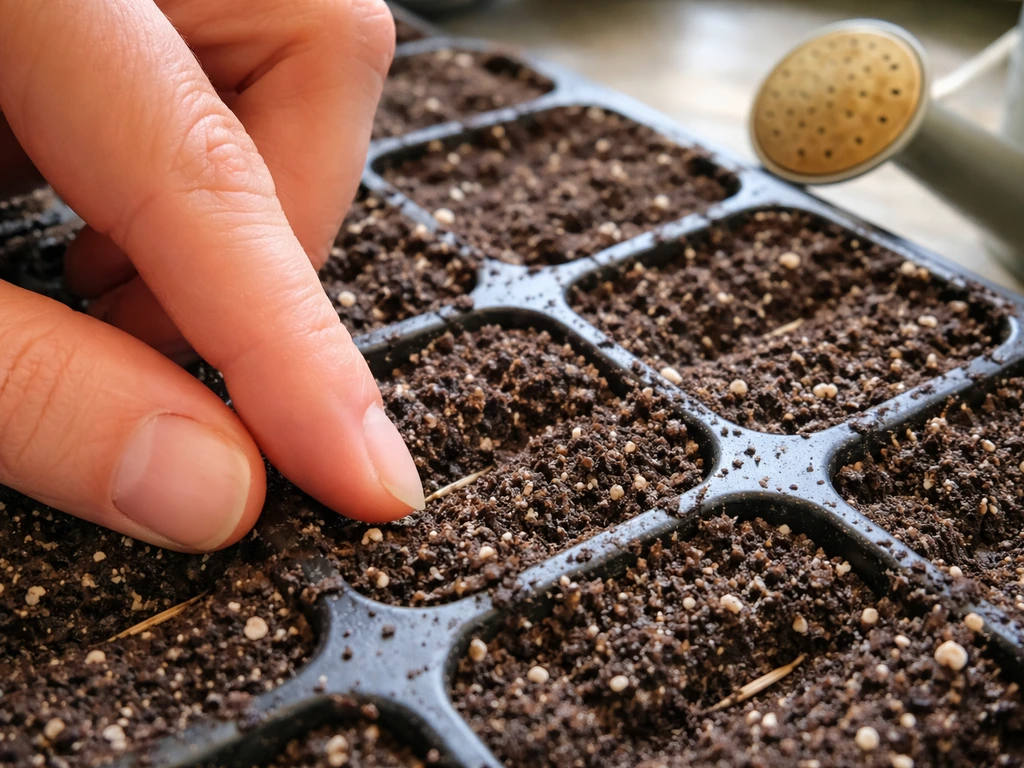
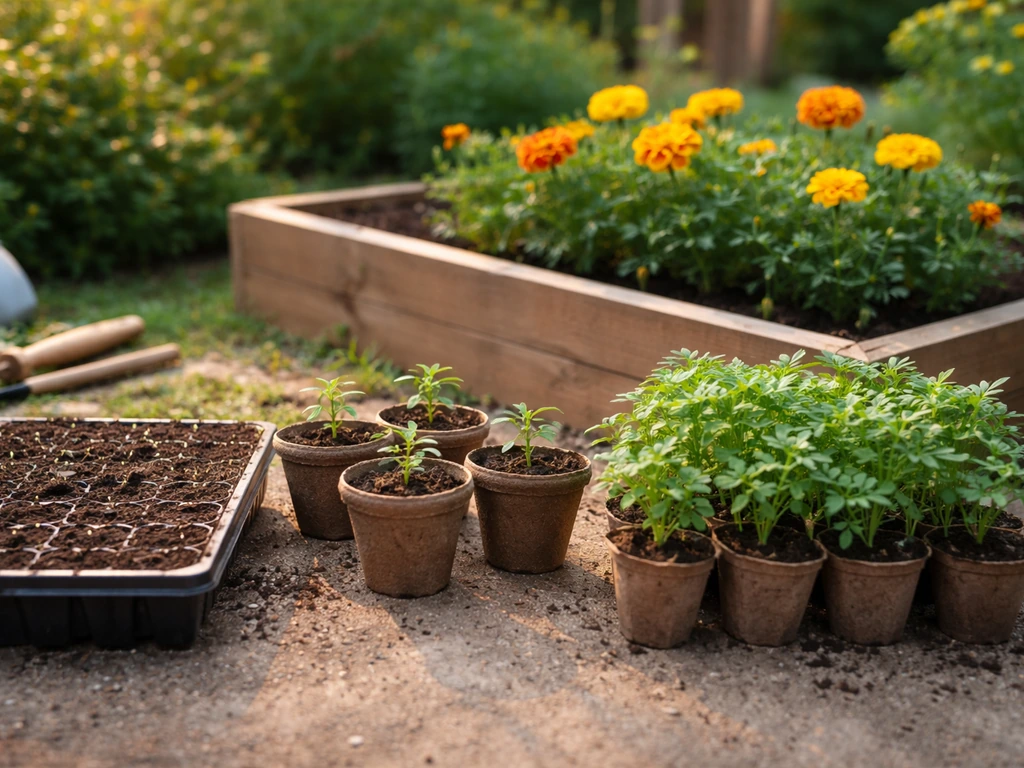
- Fill small cell trays or 3-inch pots with a moist seed-starting mix.
- Press one or two seeds about 1/4 inch deep into each cell.
- Cover lightly with mix and water gently.
- Place in a warm spot (65 to 75°F is ideal) or on a heat mat. Marigolds germinate fast, usually within 5 to 7 days.
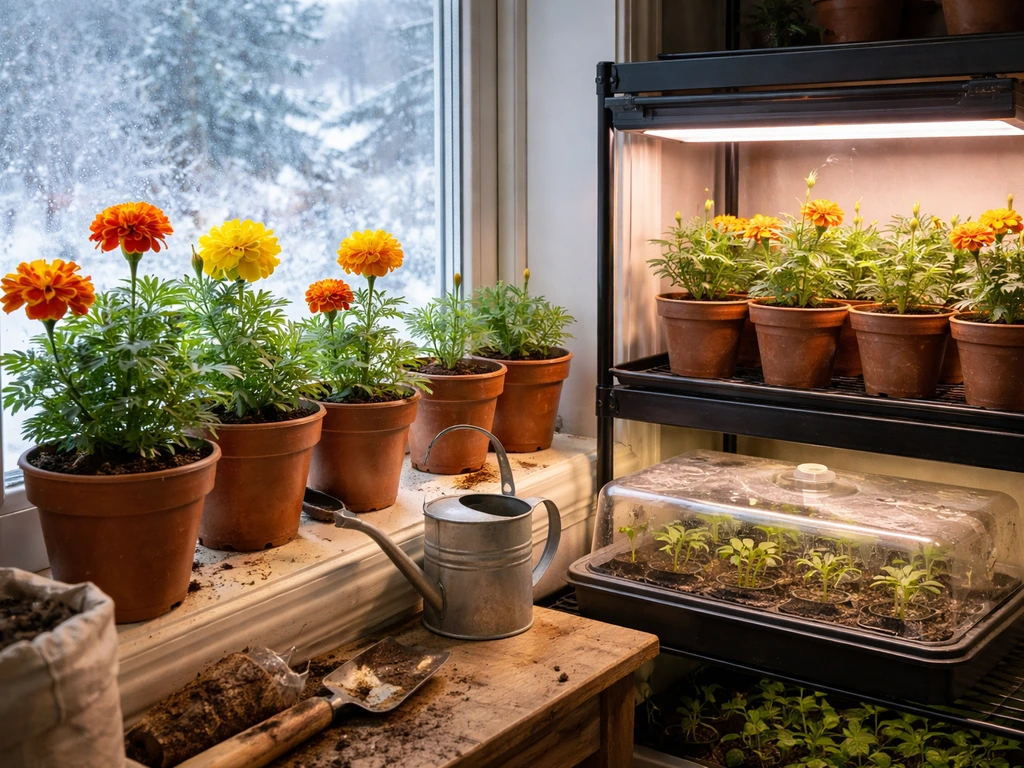
- Once seedlings emerge, move them under grow lights or to your sunniest south-facing window immediately. Leggy seedlings almost always come from insufficient light at this stage.
- Thin to one strong seedling per cell once the first true leaves appear. Snip the weaker one at soil level rather than pulling it, which can disturb roots.
Hardening off before transplanting
About a week before moving seedlings outside, begin hardening them off. Set them outdoors in a sheltered, partly shaded spot for a few hours each day, gradually increasing exposure over 7 to 10 days. This acclimation prevents transplant shock and sun scorch, which are the two most common reasons freshly planted marigolds stall out after going in the ground.
Planting established marigold transplants
If you are buying marigolds from a nursery or garden center rather than starting from seed, the process is straightforward. Wait until after your last frost date and nighttime temperatures are consistently above 45°F before putting them in the ground or a container outdoors.
- Dig a hole roughly the same depth as the root ball and about twice as wide.
- If the plant is rootbound (roots circling the bottom of the pot), gently loosen them before planting.
- Set the plant so the top of the root ball sits at or just slightly below the soil surface.
- Backfill with soil, firm gently around the base, and water thoroughly.
- Space French marigolds 8 to 10 inches apart. African marigolds need more room, 12 to 18 inches, because they grow significantly larger.
For containers, choose a pot at least 8 to 10 inches wide for French types and 12 to 14 inches for African varieties. Make sure the container has drainage holes. Marigolds sitting in standing water will develop root rot quickly, regardless of how healthy the plant looked at planting time.
Growing new plants from harvested marigold flower heads
You do not need to buy seeds every year. Once your marigolds finish blooming, the dried flower heads are full of viable seeds you can save and sow the following season, which lets you grow marigolds without seeds. This is what people usually mean when they ask about growing marigolds from the flower itself.
How to save seeds from spent flower heads
- Allow a few flowers to fully mature on the plant rather than deadheading them. The flower head will dry and turn papery and brown on the stem.
- Once the base of the flower head has dried completely, snip it off and bring it indoors.
- Pull the dried petals back to reveal the seeds clustered at the base. Marigold seeds are long, thin, and pointed at one end, often dark brown or black with a lighter tan tip.
- Separate the seeds from the chaff and spread them on a paper towel to dry for another week or two.
- Store in a paper envelope (not a plastic bag, which traps moisture) in a cool, dry place. Label with the variety and year.
- Sow the following spring using the same indoor timing described above, 6 to 8 weeks before your last frost.
One important note: if you are saving seeds from hybrid varieties (most nursery marigolds are hybrids), the plants that grow from those seeds may not look exactly like the parent. Open-pollinated or heirloom varieties like 'Crackerjack' or 'French Vanilla' will come true from seed, which makes them better candidates for seed saving if you want consistent results.
Watering, feeding, and deadheading for bigger blooms
Once established, marigolds are remarkably self-sufficient. But these three practices make a real difference in bloom size and how long your plants keep flowering.
Watering
Water deeply but infrequently. Stick your finger an inch into the soil and only water when that layer feels dry. Consistent deep watering encourages roots to grow downward, which makes plants more drought-resilient. Avoid wetting the foliage when you water, as damp leaves invite fungal problems. Drip irrigation or watering at the base of the plant is ideal. Container marigolds will need more frequent watering than in-ground plants, sometimes daily in hot weather.
Fertilizing
Go easy on fertilizer. Marigolds in decent soil often do not need much. If you amended your bed with compost at planting, a single mid-season application of a balanced granular fertilizer (something like 10-10-10) is usually enough. Avoid high-nitrogen fertilizers, which push lots of leafy green growth but reduce flower production. If you want big blooms on African marigolds, a low-nitrogen, phosphorus-forward fertilizer (like a 5-10-5) applied when buds are forming can make a noticeable difference.
Deadheading
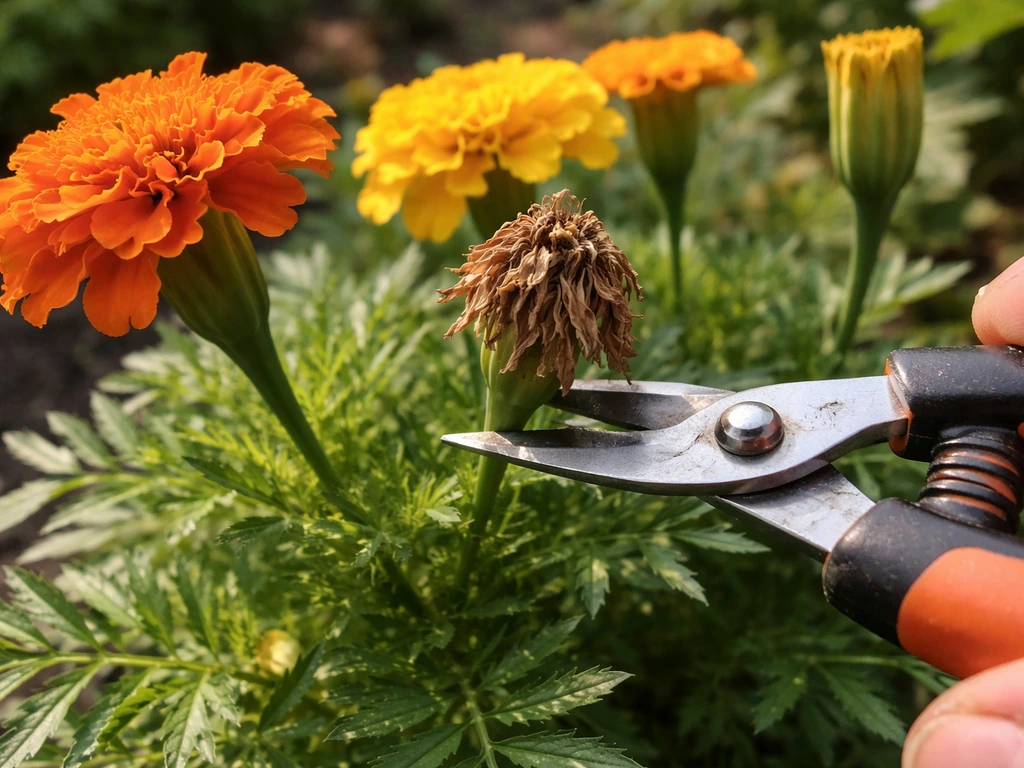
Deadheading, which means removing spent flowers before they set seed, is probably the single most effective thing you can do to keep marigolds blooming heavily. When the plant is allowed to produce seeds, it signals the plant to slow down flowering. Pinch or snip off spent blooms every few days throughout the season. On French and signet marigolds you barely notice the effort. On larger African marigold varieties, a quick pass every week or so is enough to keep the display going strong.
Common problems and how to fix them fast
| Problem | Likely Cause | Fix |
|---|---|---|
| Leggy, stretched seedlings | Not enough light after germination | Move under grow lights or to a brighter window immediately; pinch the growing tip to encourage branching |
| Few or no flowers | Too much shade, too much nitrogen, or overly rich soil | Move to full sun; switch to a low-nitrogen fertilizer; ease up on feeding |
| Yellowing leaves | Overwatering or poor drainage | Let soil dry between waterings; improve drainage with compost or sand; check container holes are clear |
| Powdery mildew on leaves | Poor air circulation, damp foliage | Water at the base; space plants properly; remove affected leaves; apply a neem oil spray if severe |
| Spider mites (fine webbing, stippled leaves) | Hot, dry conditions | Spray with water to dislodge mites; apply insecticidal soap or neem oil; ensure adequate watering |
| Slugs or caterpillars eating leaves | Moist soil, night feeding | Hand-pick at night; use slug bait around base; inspect under leaves for caterpillars |
| Plants wilting despite watering | Root rot from overwatering or compacted wet soil | Improve drainage; reduce watering; in severe cases, remove and replant in fresh soil |
Legginess in transplants is worth calling out separately because it is so common. If your seedlings are tall, floppy, and pale, they almost certainly need more light, not more water or fertilizer. Getting them under a proper grow light within the first day or two of germination is the single best habit to build for strong, compact marigold seedlings.
Your spring planting checklist (March/April timing)
Here is exactly what to do right now, given that today is late March 2026:. how to grow marigold in winter
- Check your last frost date for your zip code. If it falls in late April or May, start seeds indoors this week.
- Sow seeds in moist seed-starting mix, 1/4 inch deep, in cell trays or small pots.
- Place in a warm spot (65 to 75°F) and watch for germination in 5 to 7 days.
- Move seedlings to full light immediately once they sprout.
- Begin hardening off transplants about one week before your last frost date.
- Plant out after your last frost, once nights are consistently above 45°F.
- Space French marigolds 8 to 10 inches apart, African marigolds 12 to 18 inches.
- Amend bed with compost if soil is heavy or compacted; target pH 6 to 7.
- Start deadheading as soon as the first flowers fade to keep new blooms coming.
- If saving seeds, leave a few late-season flowers to fully dry on the plant before harvesting.
Marigolds reward simple, consistent care far more than fuss or over-management. Get the sun and drainage right, stay on top of deadheading, and they will bloom from planting time through the first hard frost. For more detail on seed timing and variety-specific guides for African marigolds, check the related articles in this series.
FAQ
How many marigold seeds should I plant per pot or cell when learning how to grow a marigold from seed?
Plant 2 to 3 seeds per cell or small pot, then thin to the strongest seedling once they sprout and develop two sets of true leaves. This prevents overcrowding, which is a common cause of leggy seedlings and weak transplants.
Why are my marigold seedlings leggy even though I started them indoors on time?
Most often it is insufficient light intensity or too much warmth. Move seedlings under a grow light as soon as they emerge, keep the light close enough to avoid stretching, and consider slightly cooler night temperatures to encourage sturdier growth.
Can I grow marigolds indoors all season?
You can grow them indoors temporarily, but they usually need very bright light, a sun-facing window that gets strong direct sun, or a grow light for most of the day. For full, reliable flowering, outdoor conditions are easiest, and indoor plants often produce fewer blooms once day length and light drop.
Do marigolds need pruning besides deadheading?
For most varieties, deadheading is enough. If plants get very floppy, you can pinch the tips lightly to encourage branching, especially on French types. Avoid heavy pruning late in the season because it can delay the next flush of flowers.
How do I prevent root rot when I am learning how to grow a marigold in a container?
Use a container with drainage holes, fill it with a well-draining potting mix, and do not let the pot sit in a saucer of water. Water only when the top inch feels dry, and in hot weather check daily because container marigolds dry out faster than garden beds.
What should I do if my marigolds bloom once and then stop, even after deadheading?
Check for two likely causes: they are getting too little sun (less than 6 hours direct), or fertilizer is too heavy on nitrogen. Reassess the light location first, then switch to a light, phosphorus-leaning feed only when buds are forming (especially for African marigolds).
Can I save seeds from any marigold and expect the same flowers next year?
Seeds saved from hybrid nursery plants often grow differently than the parent. If you want predictable flower traits, save seeds from open-pollinated or heirloom varieties, and label them at bloom time so you know what you are collecting.
Do marigolds attract pests or diseases I should watch for?
The biggest recurring issues are fungal problems from wet foliage and stress from poor drainage. Water at the base, space plants for airflow, and avoid overhead watering, especially in humid conditions. If leaves stay damp for long periods, you will usually see trouble sooner.
When is the right time to move marigolds outside if nighttime temperatures are still cool?
Wait until nighttime temperatures are consistently above about 45°F before planting outdoors. If a cold snap is possible, use row cover temporarily, but remove it during the day when temperatures rise to prevent heat buildup and stalled growth.
Can I direct sow marigolds instead of starting seeds indoors?
Yes, especially for French and signet types. African marigolds generally benefit from an indoor head start because they take longer to reach full bloom size. If you direct sow, keep the soil evenly moist until germination, but do not keep it soggy afterward.
How far apart should I plant marigolds?
Give them room to branch and ventilate. A practical starting point is about 8 to 10 inches for French types, 10 to 12 inches for many signet types, and 12 to 18 inches for African varieties depending on the mature size. If you see plants crowding, increase spacing next time because airflow affects mildew risk.
Are marigolds safe to plant near pets or edible gardens?
Marigolds are generally grown as ornamentals, but they are not considered edible, and individual pet behavior varies. If your animals chew plants, use physical barriers or place pots where pets cannot reach, and keep fallen seed heads picked up to avoid messy self-seeding where it is unwanted.