You can grow marigolds at home and get reliable, repeat blooms without much gardening experience. The plant is genuinely forgiving, but there are a handful of things you need to get right from the start: sun, drainage, and timing. Get those three correct and marigolds will flower from late spring all the way through the first frost with almost no fuss.
How to Grow Marigold at Home: Step-by-Step Guide
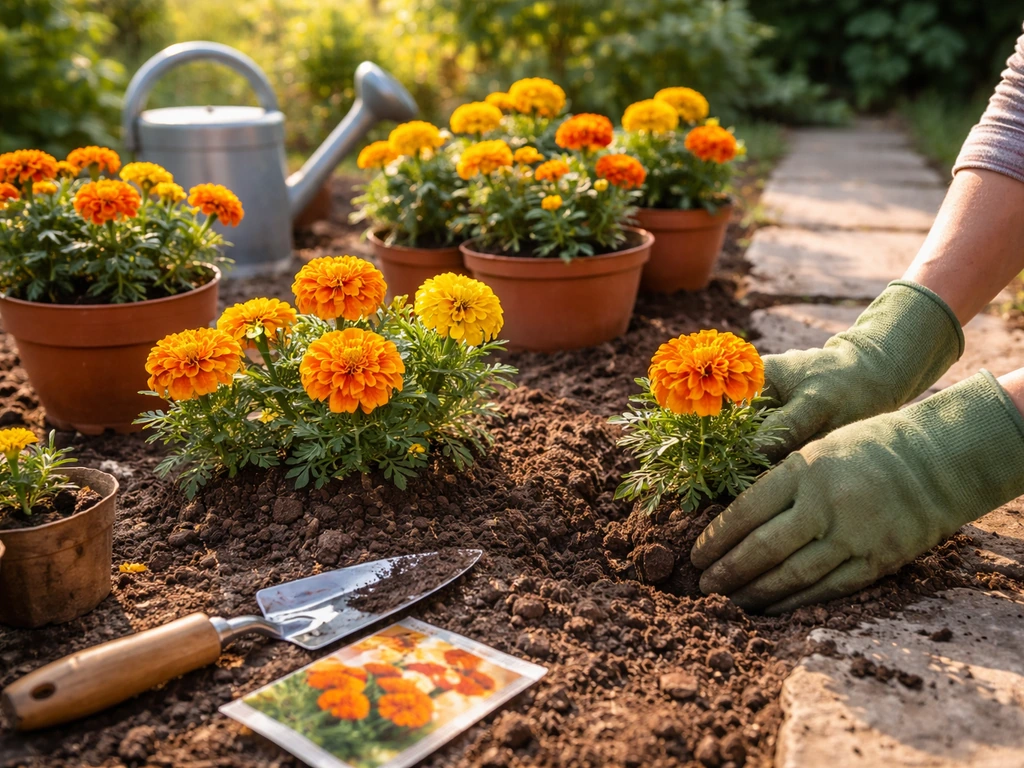
Choosing a marigold type and where it fits in your home garden
There are three main types you'll encounter: African marigolds (Tagetes erecta), French marigolds (Tagetes patula), and signet marigolds (Tagetes tenuifolia). Each has a distinct size, bloom style, and best use in a home garden, so picking the right one upfront saves a lot of frustration.
| Type | Height | Bloom Size | Best For |
|---|---|---|---|
| African (Tagetes erecta) | 18–36 inches | 3–5 inches across | Back of borders, cutting garden, statement beds |
| French (Tagetes patula) | 6–12 inches | 1–2 inches across | Container edges, front of borders, companion planting |
| Signet (Tagetes tenuifolia) | 8–12 inches | Small, single petals | Edible flowers, containers, cottage-style edges |
For most beginners growing in containers on a patio or balcony, French marigolds are the easiest starting point. If you’re learning how to grow African marigold varieties too, choose a spot with plenty of sun and give them the extra space they demand. They stay compact, flower early, and tolerate a slightly wider range of conditions than African types. If you want big, showy blooms for bouquets or a cutting garden, African marigolds are worth the extra space they demand. Signet types are underused but excellent for pots and even for garnishing food, since their petals are edible.
All three types work well as companion plants alongside tomatoes, peppers, and squash in a vegetable garden. Their scent deters several common pests, which makes them as practical as they are pretty. If you're planning a mixed flower bed, French marigolds along the front edge and African marigolds mid-border is a classic combination that also works beautifully in cutting arrangements.
Seeds vs. starter plants, and picking the right variety
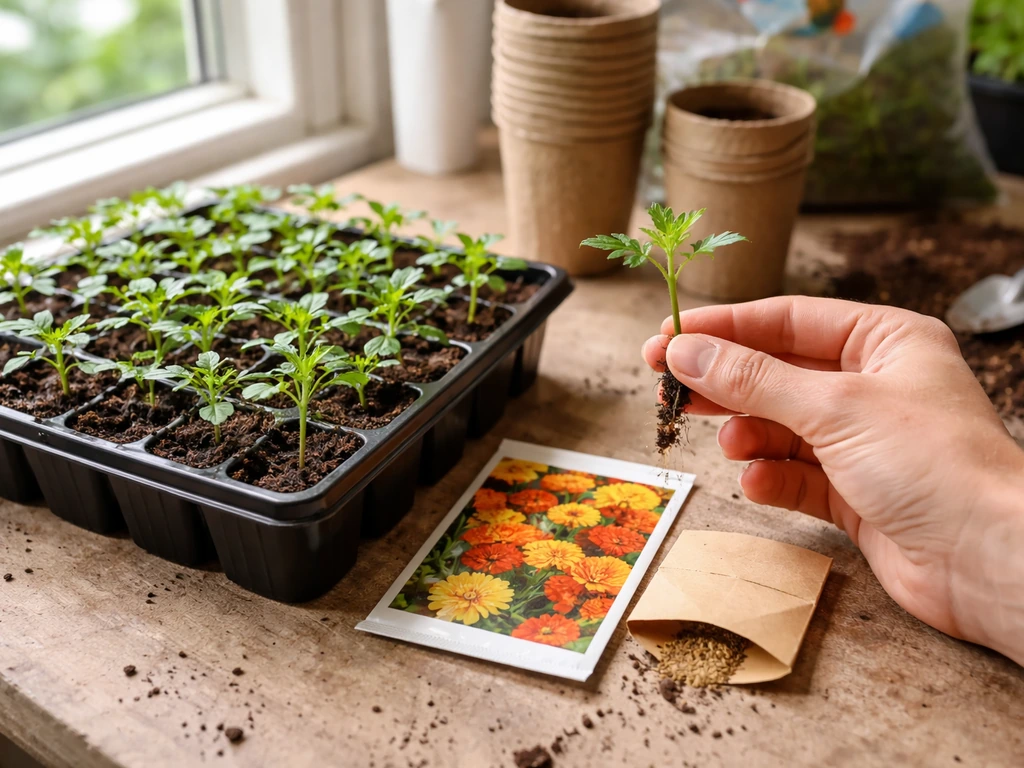
You have two starting points: seeds or transplants from a nursery. Both work, but they suit different situations.
Starting from seed is cheaper, gives you access to far more variety choices, and is genuinely easy with marigolds. A packet of seeds costs a fraction of a tray of transplants and gives you dozens of plants. If you want specific colors, heirloom varieties, or the satisfaction of growing start to finish, seeds are the better route. We cover the full seed-starting process in more detail in our dedicated guide on how to grow marigold seeds, but the basics are straightforward enough to cover here too. how to grow a marigold
Starter plants from a nursery or garden center get you flowers faster, typically by four to six weeks, and are the right call if you're planting late in the season or just want something blooming quickly. Look for compact, dark green transplants with no yellowing leaves. Avoid plants that are already blooming heavily in their nursery pots, since those have often been pushed too hard and can stall after transplanting.
For variety selection, a few reliable performers stand out. 'Crackerjack' is a classic African mix with huge 3–4 inch blooms. 'French Vanilla' is a popular cream-white African type. Among French marigolds, 'Durango' and 'Safari' series are widely available, early to flower, and very heat tolerant. For a long season with minimal deadheading, look for varieties labeled 'self-cleaning.' If you're planning to save seed at the end of the season, choose open-pollinated varieties rather than F1 hybrids.
How to plant marigolds: containers and in-ground, step by step
Soil requirements
Marigolds prefer well-drained to dry soil. They do not like sitting in wet, heavy ground. If your garden soil is clay-heavy or compacts easily, amend it with compost or coarse sand before planting. For containers, use a standard potting mix, not garden soil, which compacts in pots and restricts drainage. At planting time, work a balanced, general-purpose fertilizer (one with equal parts nitrogen, phosphorus, and potassium, such as a 10-10-10 granular formula) into the top few inches of soil. This gives the plants a solid nutritional foundation right from the start.
Planting in containers
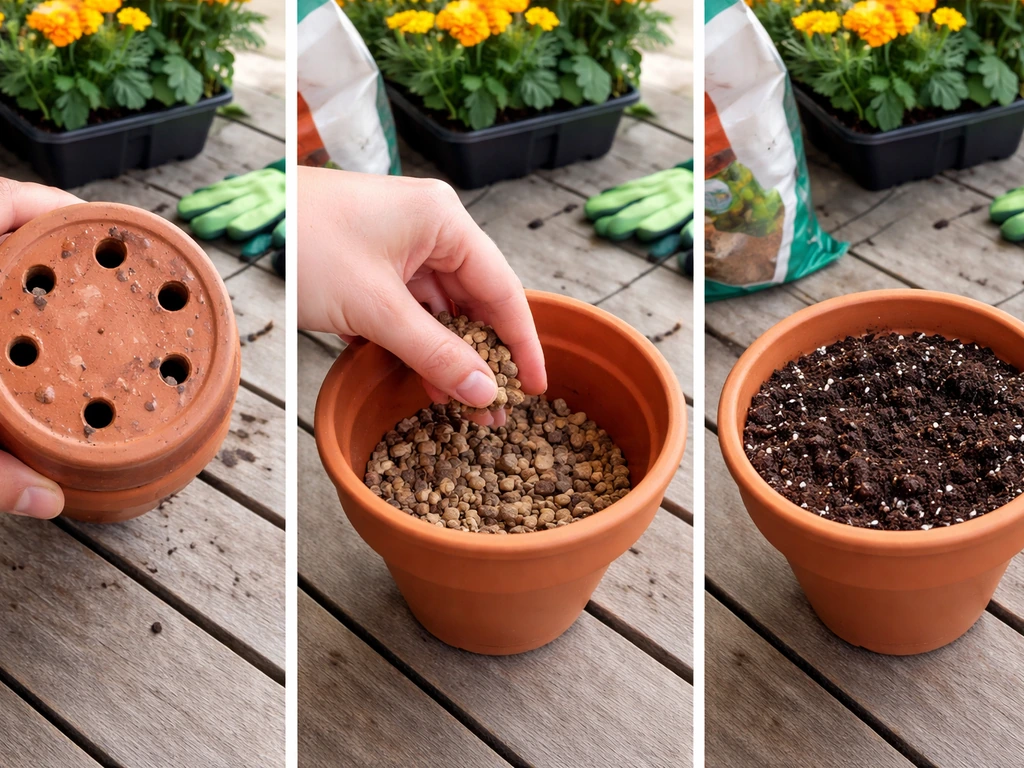
- Choose a pot at least 8 inches deep and wide for French marigolds; use 12–14 inch or larger pots for African marigolds. Every container must have drainage holes.
- Fill with a quality potting mix, leaving about an inch of headspace from the rim.
- Mix in a slow-release balanced granular fertilizer according to the package rate before planting.
- If starting from seed, sow 2–3 seeds per cell or pot, about 1/4 inch deep, and thin to the strongest seedling once they reach 2 inches tall.
- If planting transplants, set them at the same depth they were growing in their nursery container.
- Space French marigolds 6–9 inches apart if planting multiples in a large planter; African marigolds need 10–12 inches minimum.
- Water gently after planting to settle the soil, then allow the top inch to dry before watering again.
Planting in the ground
- Choose a spot with full sun, ideally getting at least six hours of direct sunlight per day, though all-day sun produces the best bloom output.
- Loosen the soil 8–10 inches deep and mix in compost if it's compacted or nutrient-poor.
- Incorporate a balanced granular fertilizer (10-10-10 or similar) at the rate listed on the package before planting.
- Dig planting holes slightly wider than the root ball of each transplant.
- Set transplants at the same depth as they were in their nursery pots, firm the soil gently around the roots, and water in well.
- Space French marigolds 8–10 inches apart, African marigolds 12–18 inches apart, to allow for air circulation and mature spread.
- Mulch lightly around the base (keeping mulch an inch or so away from stems) to retain moisture and suppress weeds.
Light, watering, and feeding for steady blooms
Full sun is non-negotiable if you want marigolds blooming all season long. Partial shade produces leafy plants with sparse flowers. Aim for a minimum of six hours of direct sun, but ideally your plants should be in sun all day. This is the single biggest factor separating struggling plants from prolific bloomers.
Watering is where most beginners go wrong in both directions. Marigolds like consistent moisture but strongly dislike overwatering. Water when the top inch of soil feels dry, roughly every two to three days in warm weather, and less frequently in cooler or cloudy stretches. For in-ground plants in well-drained soil, deep watering once or twice a week is usually sufficient. Container plants dry out faster and may need watering every one to two days in peak summer heat. Always water at the base of the plant rather than overhead, since wet foliage encourages fungal issues.
If you incorporated a balanced fertilizer at planting time, you won't need to feed heavily through the season. A light application of a complete fertilizer (one containing nitrogen, phosphorus, and potassium) every four to six weeks keeps plants healthy and supports continuous flowering. If you notice the lower leaves turning yellow overall, that's often a sign of nitrogen deficiency, and a feeding will usually correct it within a week or two. Avoid high-nitrogen fertilizers mid-season, since too much nitrogen pushes leafy growth at the expense of flowers.
Temperature, germination timing, and when to plant indoors vs. outdoors
Marigold seeds germinate best between 70 and 75 degrees Fahrenheit. At these temperatures, you'll see sprouts in five to seven days. Cooler soil slows germination significantly and can cause seeds to rot before sprouting. If you're starting seeds indoors, a seedling heat mat is a helpful investment.
For outdoor planting timing, marigolds are warm-season annuals that are killed by frost. The rule is simple: plant outdoors only after your last frost date has passed and nighttime temperatures are reliably above 40 degrees Fahrenheit. If you're in USDA zones 4–6, that's typically mid to late May. In zones 7–9, you may be planting as early as late March or April. Our guide on when to grow marigold seeds goes deeper on timing by region if you need it.
If starting from seed indoors, sow six to eight weeks before your expected last frost date. This gives you stocky transplants ready to go into the ground right when conditions are right. Marigolds grow fast enough that starting too early, say ten or more weeks ahead, can produce leggy, pot-bound seedlings that struggle after transplanting. Harden off indoor-started seedlings over seven to ten days by setting them outside in a sheltered spot for increasing lengths of time before planting them in their final location.
Keeping marigolds blooming: deadheading, pinching, and pest control
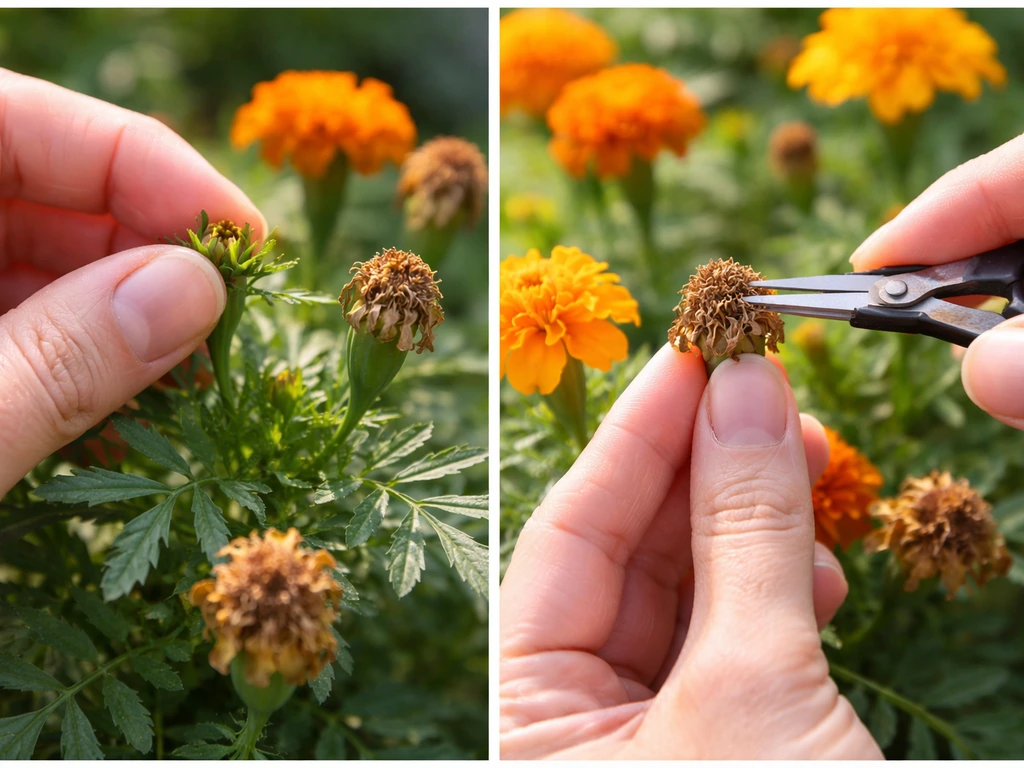
Pinching and deadheading
When your marigold seedling is young and small, maybe 4–6 inches tall with a few sets of leaves, pinch off the growing tip at the top. This sounds counterintuitive when you're eager for flowers, but it forces the plant to branch out rather than grow straight up, resulting in a bushier plant with many more flowering stems. It delays your first bloom by about a week but pays off significantly over the rest of the season.
On deadheading: marigolds are largely self-cleaning, meaning spent flowers tend to drop on their own without requiring you to remove them manually. That said, if you see spent blooms hanging on and the plant looks untidy, snipping them off at the base of the flower stem does encourage the next round of buds. It's not the critical task it is with some other flowers, but it helps if you want the tidiest-looking plants possible.
Pest and disease prevention and fixes
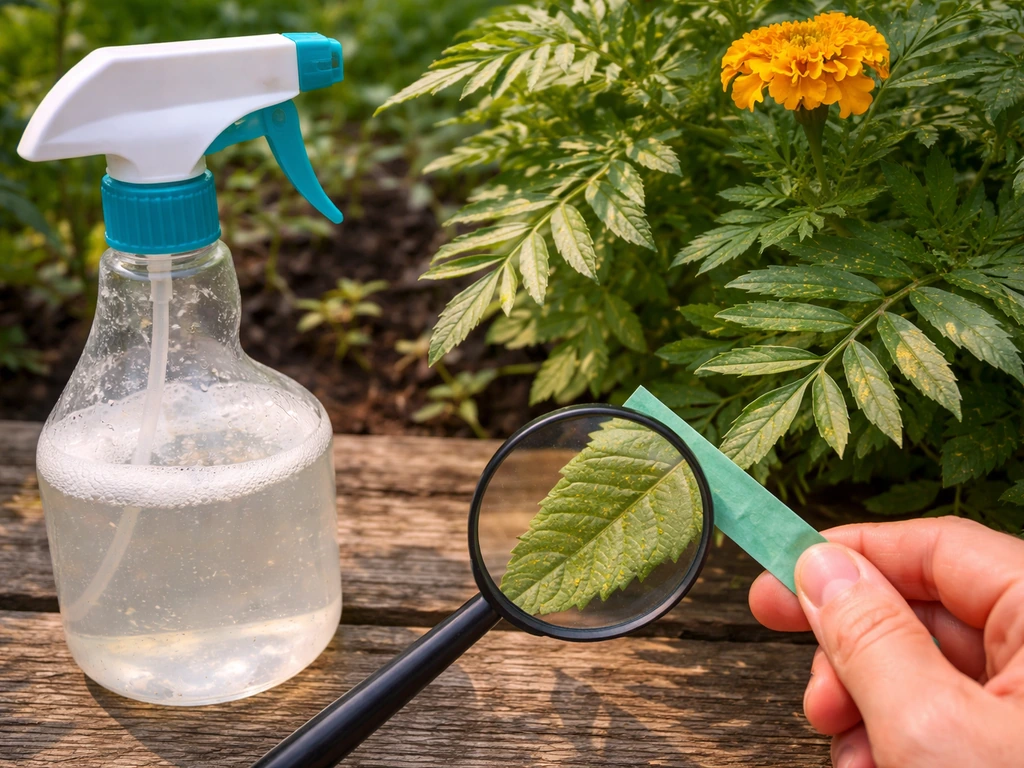
Marigolds are naturally pest-resistant compared to most garden flowers, but a few problems do come up. Spider mites are the most common issue, especially during hot, dry stretches. You'll notice fine webbing on the undersides of leaves and a stippled, dull look to the foliage. A strong blast of water from a hose knocks mites off effectively, and insecticidal soap spray handles heavier infestations. Aphids occasionally cluster on new growth; the hose-blast method works here too.
Slugs and snails are a problem in wet conditions or shaded spots, particularly for young plants. Keeping foliage dry, removing mulch from directly around stems, and using iron phosphate slug bait around plants (which is safe around pets and wildlife) addresses this effectively.
Botrytis (gray mold) and powdery mildew are the main fungal concerns. Both are driven by wet foliage, poor air circulation, and crowded planting. Prevention is straightforward: water at soil level, space plants properly, and avoid overhead watering. If you see gray fuzzy growth or white powdery patches on leaves, remove affected foliage immediately and improve airflow. A neem oil spray applied in the morning helps manage early-stage fungal issues.
Common beginner mistakes and how to fix them fast
Most marigold problems come down to the same handful of mistakes. Here's what to watch for and what to do.
- Too much shade: If your plant is tall and spindly with few or no flowers, insufficient sun is almost certainly the cause. Marigolds in shade grow toward the light but don't bloom reliably. Move container plants to a sunnier spot immediately. For in-ground plants in a shaded bed, this is a location problem that needs addressing at replanting time.
- Overwatering: Yellowing leaves that aren't simply nitrogen deficiency, mushy stems at the base, or plants that wilt even in wet soil are signs of root rot from overwatering. Let the soil dry out between waterings and confirm your containers or planting site have good drainage. There's no saving a plant with advanced root rot, but catching it early by reducing water often allows recovery.
- Planting too close together: Crowded plants compete for nutrients and light, and restricted airflow invites fungal disease. If your plants look weak and are touching each other at the base, thin them to the recommended spacing even if it feels wasteful.
- Planting outdoors too early: A frost after planting kills marigolds outright. If plants come out of the ground looking blackened or wilted after a cold night, they've been frosted. Wait for reliably frost-free conditions and harden off indoor-started plants properly before transplanting.
- Skipping the pinch: Young plants that weren't pinched grow tall and produce flowers mainly at the tips rather than across a bushy, branching plant. If your plant is still small (under 8 inches), it's not too late to pinch it and encourage better branching.
- Using poor seed-starting conditions: Seeds sown in cold, wet, dense potting mix often rot instead of germinating. Use a seed-starting mix (not regular potting soil), maintain soil temperature around 70–75°F, and keep the medium moist but not soggy. Covering the seed tray with a plastic dome until germination maintains both warmth and moisture.
- Overfeeding with nitrogen: Plants that are lush and leafy but not blooming mid-season are often getting too much nitrogen. Switch to a low-nitrogen or bloom-boosting fertilizer (look for a formula with a higher middle number on the NPK label, like 5-10-5) to shift the plant's energy toward flowers.
Marigolds are one of the most rewarding flowers you can grow at home precisely because the payoff, weeks and weeks of bright, fragrant blooms, is so disproportionate to the effort required. Get the sun exposure right, don't overwater, give the plants room to breathe, and pinch them early. Everything else is just fine-tuning.
FAQ
How many marigold plants should I grow in a container, and what size pot do they need?
For typical patio pots, plan on one marigold per 8 to 10 inch pot (or one per 10 to 12 inch basket section). Use more spacing for African types, since they get wider, and make sure the pot has drainage holes plus a tray you empty after watering so roots never sit in water.
My marigolds have lots of leaves but few flowers, what should I check first?
The fastest causes to rule out are too much nitrogen and too little sun. If you fed heavily or used a high-nitrogen fertilizer, switch to only light feeding with a complete fertilizer. Also confirm you are getting at least six hours of direct sun, partial shade often leads to leafy growth with sparse blooms.
Do marigolds need deadheading in order to bloom continuously?
They are largely self-cleaning, so you can often skip it. Deadheading is most useful when spent blooms are staying attached or the plant looks untidy. Snip the flower at the base of the stem, and you should see a new bud set sooner, especially on stressed or slightly crowded plants.
How can I tell if my watering is too much or too little?
Too little usually shows up as drooping or dry, crispy leaf edges, and the plant may slow flowering. Too much often causes yellowing that looks overall, plus persistent damp soil and a tired, soft feel in stems. A simple check is the top inch of soil, water only when it dries there, and in containers empty any standing water in the saucer.
What’s the best way to pinch marigolds, and should I pinch all varieties?
Pinch when seedlings are about 4 to 6 inches tall and have a few sets of leaves, remove the growing tip to force branching. It is generally beneficial across types, but if your plants are already stressing from cold or transplant shock, wait a few days after planting so you do not compound the stress.
Can I grow marigolds indoors year-round with grow lights?
Yes, but you need strong light to replace full sun. Use a bright grow light set close enough to prevent legginess, rotate the pot regularly, and keep watering based on dry topsoil, indoor air can swing between dry and humid quickly. Without sufficient light, you will usually get foliage and fewer blooms.
Why are my marigolds getting brown spots or fuzzy gray growth?
Those symptoms point to fungal issues like botrytis, especially if foliage stays wet or plants are crowded. Remove affected leaves immediately, improve airflow by spacing, and switch to watering at soil level. If it is early, neem oil in the morning can help, but heavily affected parts should be removed rather than covered in spray.
Do marigolds attract pollinators, or are they mainly pest deterrents?
They do both. Marigolds can attract beneficial insects such as hoverflies and some pollinators, while their scent can discourage certain pests. If you are growing them near vegetables, plant in the same area rather than in a distant border so the beneficial insects actually spend time in your beds.
Should I mulch around marigolds, and can mulch worsen slugs?
Mulch can be helpful for moisture control, but slugs like cool, damp hiding spots. If you mulch, keep material pulled back a bit from the stems and avoid thick mulch in shaded, wet areas. For persistent slug pressure, iron phosphate bait placed near plants tends to be more targeted than simply adding more mulch.
Can I save seeds from my marigolds, and how do I avoid hybrid problems?
You can save seed only reliably from open-pollinated varieties, not F1 hybrids. Let seed heads fully dry on the plant, then store dry seed in a cool, sealed container. If you do not know the type, choose an open-pollinated variety next season to build a consistent seed-saving habit.
Next Articles
How to Grow a Marigold: Big Blooms Step by Step Guide
Step by step guide on how to grow marigolds from seed or plants for big blooms, including planting, care, and troublesho
How to Grow Marigold in Winter: Step-by-Step Guide
Step-by-step winter marigold growing: choose the right setup, light, watering, soil, and troubleshoot leggy or fungal is
When to Grow Marigold Seeds: Timing Guide for Blooms
Find the best time when to grow marigold seeds, including indoor vs outdoor sowing, germination, and bloom timing.